
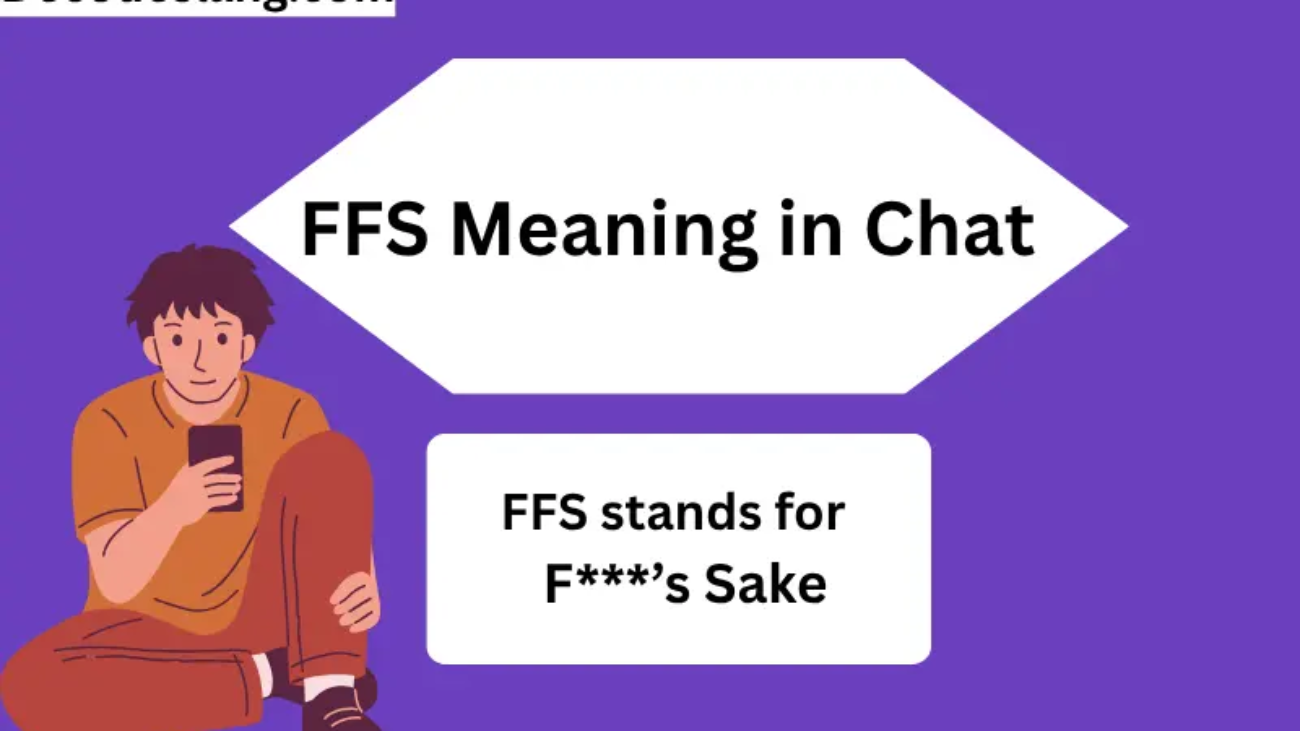
FFS meaning in chat is very simple but very strong: FFS stands for “For F*’s Sake,” and it is used to show strong frustration, annoyance, or anger in a conversation.** Even though it is only three letters, it carries a powerful emotional meaning. People use it when they feel tired, irritated, or upset about something that is not going the way they expected.
In today’s fast digital world, people prefer short forms and abbreviations while chatting on platforms like WhatsApp, Instagram, Messenger, and many others. These short forms help save time and make communication quicker. At the same time, they also help express emotions more clearly. FFS is one such slang term that shows strong feelings in a very short way. Instead of writing a long sentence to explain frustration, people simply write FFS, and the message is understood immediately.
However, it is important to understand that FFS is not a polite or formal word. It comes from a phrase that includes a strong expression, so it should be used carefully. It is mostly used in casual conversations where people are comfortable with each other. In this article, you will learn everything about FFS in a simple and easy way, including its meaning, usage, tone, examples, and important tips.
Summary Table
| Category | Details |
| Full Form | For F***’s Sake |
| Meaning | Expression of frustration |
| Type | Internet slang |
| Usage | Casual chat |
| Tone | Angry / Annoyed / Frustrated |
| Example | “FFS, why is this not working?” |
| Purpose | To show strong emotion |
What Does FFS Mean in Chat?
FFS is a popular slang word used in texting and online conversations. It stands for “For F***’s Sake,” and it is mainly used to express strong frustration or annoyance. When people use FFS, they are usually reacting to a situation that is bothering them or not going as expected.
For example, if someone says, “FFS, I forgot my keys again,” it shows that they are frustrated with themselves. In another situation, a person might say, “FFS, this internet is so slow,” which shows irritation about a problem they are facing. The purpose of using FFS is to make the emotion clear without writing a long explanation.
It is stronger than simple words like “annoyed” or “upset.” That is why it is mostly used when emotions are high.
Full Form of FFS Explained in Detail
The full form of FFS is “For F***’s Sake.” This phrase has been used in spoken English for many years to show frustration or anger. Because the phrase includes a strong word, people shorten it to FFS in texting. This makes it quicker to type and slightly less direct, but the emotional meaning still remains strong.
Even though it is written in short form, people understand its full meaning. It is a powerful expression, and that is why it should be used carefully. It is not suitable for formal situations, but it works well in casual chats where people understand slang and tone.
Understanding the full form helps you understand why FFS sounds strong and why it should be used in the right context.
Why Do People Use FFS in Chat?

People use FFS because it allows them to express strong emotions quickly and clearly. In texting, it is not always easy to show feelings, so short words like FFS help add emotion to messages. It makes communication faster and more expressive at the same time.
Another reason people use FFS is because it saves time. Writing a full sentence to explain frustration can take longer, but using FFS makes it simple. It is especially useful in moments when someone is reacting quickly to a situation, such as a mistake or a problem.
FFS is also commonly used when frustration happens again and again. For example, if something keeps going wrong repeatedly, people use FFS to show that they are tired of it. This makes the message stronger and more emotional.
How FFS Is Used in Messages
FFS can be used in different parts of a sentence depending on how a person wants to express their feeling. Most commonly, it is used at the beginning of a sentence. For example, “FFS, this app is not working” clearly shows frustration from the start.
It can also be used at the end of a sentence, such as “Why does this keep happening, FFS?” In this case, it adds emphasis and makes the sentence sound more emotional.
Sometimes, people even use FFS as a short reply when they are very annoyed. In such cases, the meaning is understood from the situation. No matter where it is used, the purpose remains the same—to show strong frustration.
Real-Life Examples of FFS
FFS is used in many everyday situations. For example, a student might say, “FFS, I forgot my homework,” when they realize their mistake. A gamer might say, “FFS, I lost again,” when they are frustrated after losing a game.
In daily life, someone might say, “FFS, I am late again,” when they are upset about being late. In another situation, a person might say, “FFS, this phone is not charging,” when facing a technical issue.
These examples show that FFS is used in many different contexts, but the main emotion is always frustration or annoyance.
When Should You Use FFS?
You should use FFS in casual conversations where people are comfortable with informal language. It is best used with friends or people who understand slang. It works well when you want to express frustration quickly and clearly without explaining everything in detail.
Using FFS in the right situation can make your message more expressive and relatable. It can also make conversations feel more natural and real, especially when people are reacting emotionally.
When Should You NOT Use FFS?
FFS should not be used in formal communication such as job emails, professional messages, or academic writing. It can sound rude or unprofessional in these situations.
It is also important to avoid using FFS with people you do not know well. They may not understand your tone and might find it offensive. In serious conversations, using FFS can make the situation worse, so it should be avoided.
Understanding when not to use FFS is very important for good communication.
Emotional Tone of FFS
The tone of FFS is usually strong and emotional. It often shows frustration, anger, or irritation. However, in some situations, especially with friends, it can be used in a slightly funny or dramatic way.
The meaning of FFS depends on the context. The same word can sound serious in one situation and playful in another. That is why it is important to understand tone before using it.
Difference Between FFS and Other Slang Words
FFS is different from other slang words because it specifically shows frustration. For example, OMG is used for surprise, and LOL is used for laughter. FFS, on the other hand, is used when something is annoying or frustrating.
Using the correct slang word helps make your message clear and accurate. Each word has its own purpose and emotion.
Common Mistakes When Using FFS
One common mistake is using FFS too often. This can make messages sound overly negative or aggressive. Another mistake is using it in situations where it is not appropriate, such as formal communication.
Some people also use FFS without understanding its strong tone, which can lead to misunderstandings. To avoid these mistakes, it is important to use FFS carefully and only when it fits the situation.
Advantages of Using FFS
FFS is helpful because it allows people to express strong emotions quickly. It saves time and makes messages more expressive. It is also widely understood in online communication, which makes it easy to use.
Disadvantages of Using FFS
FFS can sound rude or offensive if used incorrectly. It may create misunderstandings, especially with people who are not familiar with slang. It is also not suitable for formal communication, which limits where it can be used.
SEE ALSO; Cool Meaning in Chat: What It Really Means in Text Messages
FAQs
1. What does FFS mean in chat?
It means “For F***’s Sake.”
2. Is FFS rude?
It can be, depending on tone.
3. Can I use FFS in emails?
No, it is informal.
4. When should I use FFS?
In casual chats.
5. Is FFS common?
Yes, very common.
6. Does FFS show anger?
Yes, mostly.
7. Can FFS be funny?
Sometimes.
8. Is FFS easy to use?
Yes, but carefully.
Conclusion
FFS is a strong and expressive slang word used in chat to show frustration or annoyance. It stands for “For F***’s Sake” and is commonly used in informal conversations.
It is simple, quick, and powerful, but it should be used carefully because of its strong tone. When used correctly, it can make communication more clear and expressive.