CMP MENING IN CHAT

CMP Meaning in Text – What It Really Means in Chat

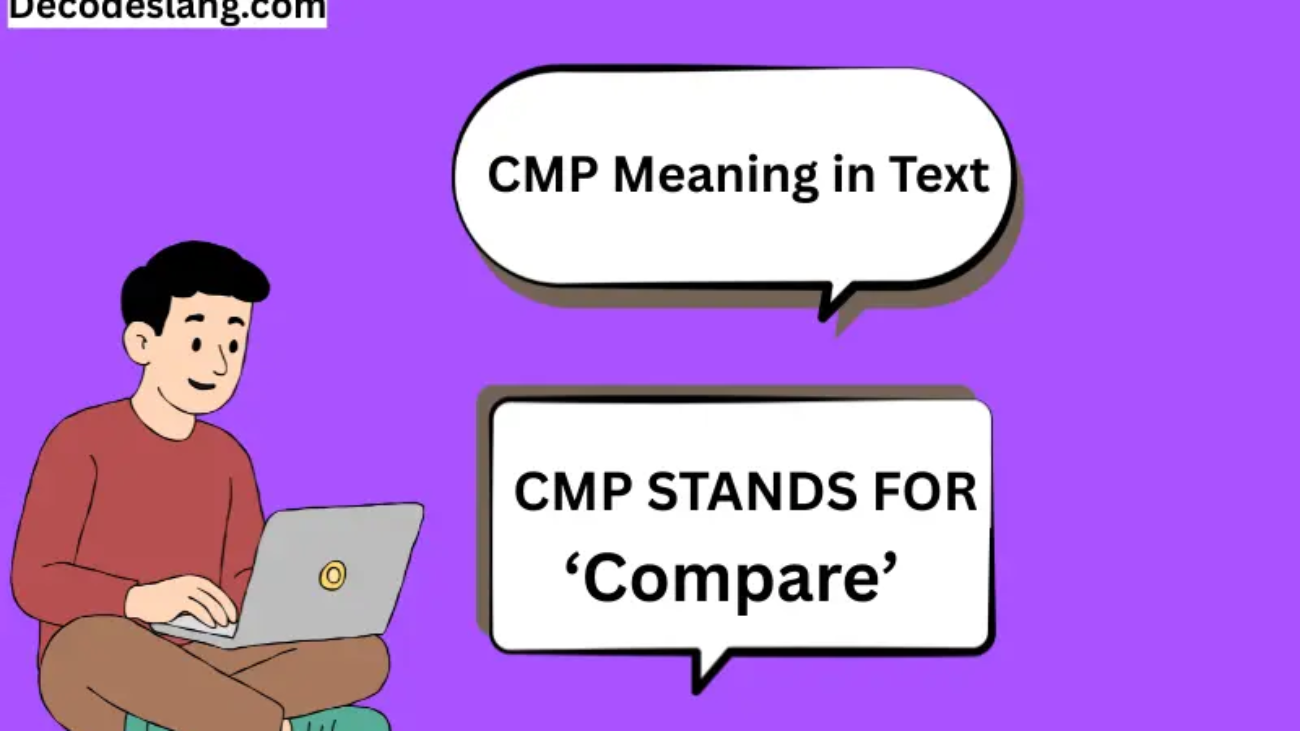
CMP meaning in text can have multiple meanings depending on the context of the conversation. In casual texting and online communication, CMP is often used as a shorthand abbreviation for phrases such as “Compare,” “Companion,” “Campaign,” or other context-specific terms. Unlike popular texting abbreviations such as LOL or IDC, CMP does not have one universally accepted meaning. Instead, its interpretation depends heavily on where it is used, who is using it, and the topic being discussed.

As digital communication continues to evolve, abbreviations have become an important part of everyday conversations. People use short forms to save time, reduce typing effort, and communicate more efficiently. CMP is one of those abbreviations that may appear in text messages, social media conversations, gaming communities, educational discussions, business communication, and technical fields. Because it has multiple meanings, understanding the context is essential when interpreting CMP correctly.

In this detailed guide, you will learn what CMP means in text, its possible full forms, how it is used in different situations, examples of usage, social media relevance, advantages and disadvantages of abbreviations, and frequently asked questions.

What Does CMP Mean in Text?

CMP is an abbreviation that can represent several different words or phrases. Unlike abbreviations with a fixed meaning, CMP is highly context-dependent. The exact meaning depends on the topic of discussion and the environment in which it appears.

In many casual conversations, CMP may be used as a shortened version of the word “compare.” For example, someone discussing two products might write “CMP both options before buying.” In this situation, CMP simply means compare.

In other contexts, CMP may refer to business terms, gaming terminology, academic references, or technical concepts. Because there is no single universal definition, readers must pay attention to the surrounding conversation to understand what the abbreviation means.

This flexibility makes CMP both useful and potentially confusing. While abbreviations save time, they can also create misunderstandings when multiple interpretations exist.

CMP Stands For – Common Full Forms

The abbreviation CMP has several common interpretations. The most popular meanings include:

The meaning of CMP depends entirely on the context. Someone discussing technology may use CMP differently than someone chatting with friends online.

The Growing Use of Abbreviations in Digital Communication
Abbreviations have become increasingly common because people communicate faster than ever before. Mobile devices, messaging apps, and social media platforms encourage quick conversations. As a result, users often shorten words and phrases to save time.

CMP is one example of how abbreviations continue to evolve. While some abbreviations become universally recognized, others remain niche and depend on specific communities. This explains why CMP may mean one thing in a business discussion and something completely different in a casual text conversation.

The popularity of abbreviations reflects a broader trend toward efficiency in communication. People prefer shorter messages that deliver information quickly without requiring long explanations.

CMP as “Compare” in Text Messages

One of the most common interpretations of CMP in texting is “compare.” In this usage, people shorten the word to save typing time while discussing similarities or differences between things.

For example, someone shopping online might send a message saying, “CMP these phones before ordering.” In this case, they are advising someone to compare the phones before making a purchase decision.

Similarly, students may use CMP when discussing assignments, research topics, or academic comparisons. The abbreviation serves as a quick substitute for the full word while maintaining the intended meaning.

Because comparison is such a common activity in everyday life, this interpretation of CMP frequently appears in casual conversations.

CMP in Social Media Conversations

Social media platforms encourage short and fast communication. Because of this, abbreviations like CMP often appear in comments, captions, hashtags, and direct messages.

For example, a user reviewing products might write, “CMP both versions before deciding.” Another person discussing travel destinations may say, “CMP the costs before booking.”

The use of abbreviations on social media helps users communicate efficiently while staying within character limits or maintaining concise posts. CMP fits naturally into this communication style because it shortens a commonly used word without changing its meaning.

CMP in Business Communication
In business environments, CMP can represent several professional terms. One common interpretation is “Campaign.” Marketing professionals frequently use the abbreviation when discussing advertising strategies, promotional activities, and digital marketing efforts.

For example, a marketing team might discuss the performance of a CMP and analyze its effectiveness. In this context, CMP refers to a campaign rather than compare.

Another business-related meaning is “Content Management Platform.” Companies that manage websites and digital content often use CMP to describe systems that organize and distribute information.

These examples demonstrate how the meaning of CMP changes depending on the professional setting.

CMP in Technology

Technology is another field where CMP has specialized meanings. Software developers, IT professionals, and digital marketers often use CMP to refer to technical systems and tools.

A common example is Content Management Platform, which helps organizations manage websites, digital assets, and online content. Businesses rely on these platforms to publish information efficiently and maintain consistent online experiences.

Because technology evolves rapidly, abbreviations often develop multiple interpretations. Understanding the technical context is essential when encountering CMP in technology discussions.

CMP in Gaming Communities

Gaming communities frequently create their own abbreviations and slang terms. Depending on the game and community, CMP may refer to companions, campaigns, or other game-related concepts.

For example, role-playing games often include companion characters that assist players during missions. Gamers may use CMP as shorthand when discussing these companions.

In strategy and action games, CMP might refer to campaign modes, where players complete story-driven objectives. These examples show how gaming communities adapt abbreviations to fit their specific needs.

Why Context Matters When Understanding CMP
Context is the most important factor when interpreting CMP. Because the abbreviation has multiple meanings, reading it without context can lead to misunderstandings.

For instance, if someone says “CMP the results,” the meaning is likely “compare.” However, if a marketing manager mentions “the latest CMP,” they may be referring to a campaign.

The surrounding words, topic of discussion, and communication setting all help determine the correct interpretation. This is why context is critical whenever abbreviations have multiple meanings.

Examples of CMP in Everyday Conversations

Understanding examples can make the meaning of CMP much easier to recognize.

Example 1:

Person A: “Which laptop should I buy?”

Person B: “CMP the specs before choosing.”

Here, CMP means compare.

Example 2:

Person A: “How is the marketing project going?”

Person B: “The CMP is performing well.”

In this example, CMP refers to a marketing campaign.

Example 3:

Person A: “What platform does your company use?”

Person B: “We manage everything through a CMP.”

Here, CMP means Content Management Platform.

These examples highlight how context changes the meaning.

Advantages of Using CMP

Abbreviations like CMP offer several advantages. They help users communicate faster, reduce typing effort, and make conversations more efficient.

In professional settings, abbreviations can streamline discussions and improve productivity. Teams that frequently use industry-specific terminology benefit from shorter forms that save time.

In casual conversations, abbreviations make texting quicker and more convenient. This explains why abbreviations remain popular despite occasional confusion.

Disadvantages of Using CMP

The primary disadvantage of CMP is ambiguity. Because it has multiple meanings, readers may misunderstand the intended message.

Another challenge is audience familiarity. Not everyone understands specialized abbreviations, especially those used in specific industries or communities.

Using abbreviations excessively can also reduce clarity. In situations where precision is important, writing the full term may be a better choice.

How to Determine the Correct Meaning of CMP
When you encounter CMP in a message, the best approach is to examine the surrounding context. Ask yourself what topic is being discussed and whether the abbreviation fits naturally within that subject.

If the conversation involves shopping, products, or comparisons, CMP likely means compare. If the discussion focuses on marketing, technology, or business operations, CMP may represent a professional term.

Understanding the audience and purpose of the conversation can also help identify the correct interpretation.

The Future of Texting Abbreviations Like CMP

Texting abbreviations continue to evolve as digital communication changes. New slang terms emerge regularly, while older abbreviations adapt to new contexts.

CMP demonstrates how abbreviations can remain useful even when they have multiple meanings. As communication becomes increasingly digital, abbreviations will likely continue playing an important role in how people interact online.

The challenge will be balancing efficiency with clarity. Users must ensure that their abbreviations are understandable to the people they are communicating with.

Summary Table

FAQs

What does CMP mean in text?

CMP most commonly means “Compare” in casual texting, but it can have other meanings depending on the context.

Is CMP a common texting abbreviation?

It is less common than abbreviations like LOL or IDC, but it is still used in certain conversations and industries.

Can CMP have multiple meanings?

Yes. CMP can represent compare, campaign, companion, content management platform, and several other terms.

How do I know what CMP means?

Look at the context of the conversation, topic, and audience to determine the correct meaning.

Is CMP used professionally?

Yes. Many industries use CMP as an abbreviation for specialized terms.

SEE ALSO: BFFR Meaning in Text; What It Really Means in Chat

Conclusion

CMP meaning in text can vary widely depending on context. While it often stands for “Compare” in casual conversations, it can also represent professional, technical, marketing, and gaming-related terms. Because CMP does not have one universal definition, understanding the surrounding conversation is essential.

As digital communication continues to evolve, abbreviations like CMP help people communicate quickly and efficiently. However, clarity remains important, and users should always consider whether their audience will understand the intended meaning. By paying attention to context, you can accurately interpret and use CMP in a wide variety of situations.
HYD MEANING IN TEXT

HYD Meaning in Text; What It Really Means in Chat

In today’s digital world, people communicate faster than ever through text messages, social media platforms, online chats, and messaging apps. To save time and make conversations quicker, internet users often rely on abbreviations and slang terms. One such abbreviation that frequently appears in text messages is HYD.

If you’ve received a message containing “HYD” and wondered what it means, you’re not alone. Many people encounter this acronym for the first time and become curious about its meaning and usage. Understanding internet slang can help you communicate more effectively and avoid misunderstandings in online conversations.

This comprehensive guide explains the HYD meaning in text, its origins, different contexts, examples, alternatives, and how to use it properly in everyday digital communication.

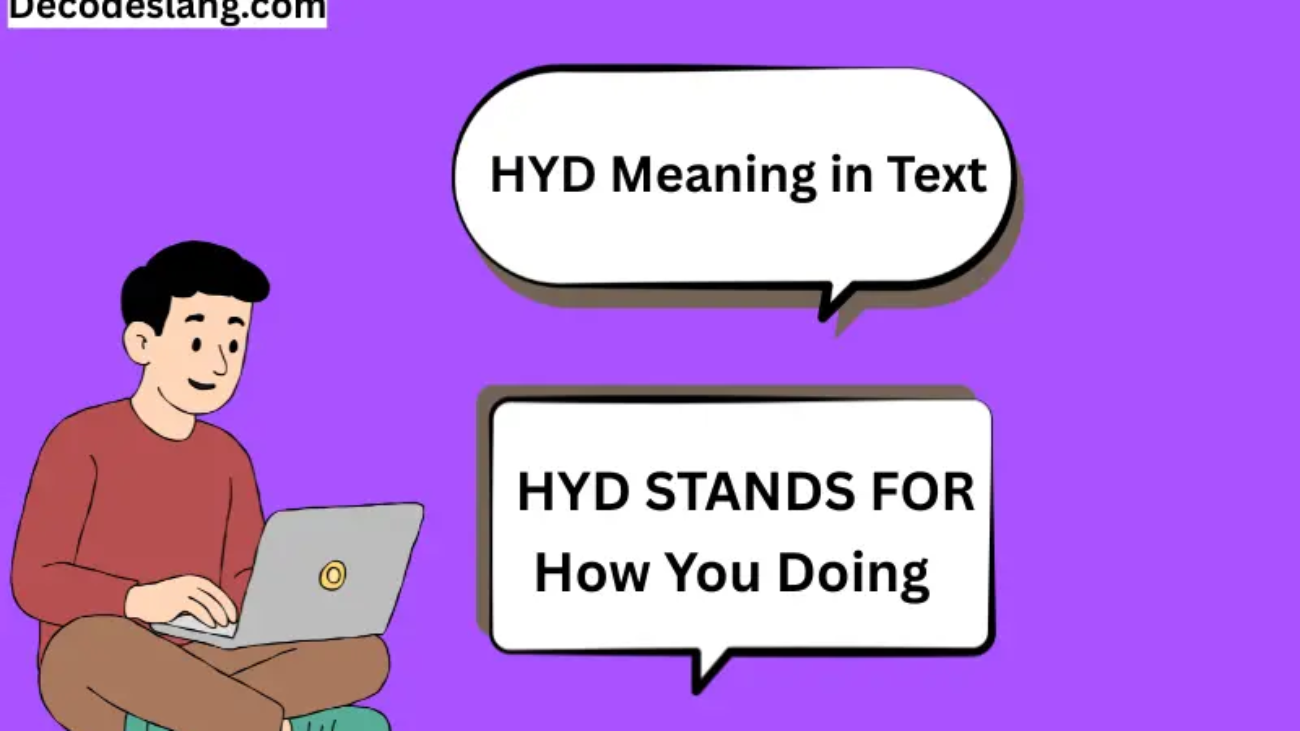
HYD Meaning in Text

HYD stands for “How You Doing?”

It is a casual greeting commonly used in text messages, social media chats, and instant messaging apps. The abbreviation is essentially a shortened version of the question “How are you doing?” or “How have you been?”

People use HYD to start conversations, check in on friends, or simply greet someone in a relaxed and informal way.

Example:

Person A: HYD?

Person B: I’m doing great! How about you?

In this example, HYD functions as a friendly greeting that encourages conversation.

Quick Summary Table

What Does HYD Mean?

HYD is a conversational acronym used to ask someone about their well-being or current situation. Instead of typing the full phrase “How are you doing?” users shorten it to HYD for convenience.

The acronym reflects the growing trend of abbreviated communication on digital platforms where speed and efficiency are valued.

When someone sends HYD, they typically want to:

  • Start a conversation
  • Check on a friend
  • Reconnect with someone
  • Show interest in someone’s well-being
  • Continue an existing chat

The meaning remains friendly and informal in most situations.

Origin of HYD

The exact origin of HYD is difficult to trace because internet slang often develops organically through online communities.

As texting became more popular during the early 2000s, users started shortening common phrases to save time and reduce typing effort. Similar abbreviations such as:

  • LOL (Laugh Out Loud)
  • BRB (Be Right Back)
  • IDK (I Don’t Know)
  • WYD (What You Doing)

became mainstream.

HYD emerged as another practical shorthand for a frequently used greeting.

Today, it is commonly seen across various communication platforms.

Where Is HYD Commonly Used?

HYD appears on many digital communication channels.

Text Messages

Friends often use HYD to begin casual conversations.

Example:

“Hey! HYD today?”

Snapchat

Snapchat users frequently send short messages, making HYD a convenient greeting.

Example:

“HYD? Haven’t talked in a while.”

Instagram Direct Messages

People often use HYD when reconnecting with followers or friends.

Example:

“HYD lately?”

Facebook Messenger

Friends and family members may use HYD during casual chats.

Example:

“Hi! HYD?”

WhatsApp

WhatsApp conversations often include abbreviations like HYD.

Example:

“HYD? Everything good?”

Online Gaming Chats

Gamers use HYD to greet teammates before or during games.

Example:

“HYD everyone?”

Different Ways HYD Can Be Used

Although HYD usually means “How You Doing?”, its exact purpose can vary depending on context.

1. Friendly Greeting

This is the most common usage.

Example:

“Hey Sarah, HYD?”

Meaning:

“Hey Sarah, how are you doing?”

2. Checking on Someone

HYD can show concern or care.

Example:

“I heard you’ve been busy lately. HYD?”

Meaning:

The sender wants to know how you’re doing.

3. Starting a Conversation

Many people use HYD when they don’t have a specific topic in mind.

Example:

“HYD?”

Meaning:

The sender simply wants to chat.

4. Reconnecting After a Long Time

HYD is often used when contacting someone after weeks or months.

Example:

“Long time no talk! HYD?”

Meaning:

The sender wants to reconnect.

Examples of HYD in Text Conversations

Example 1

Alex: HYD?

Emma: Pretty good! Just got home from work.

Example 2

John: Hey, HYD?

Mike: Doing great. Thanks for asking.

Example 3

Sophia: HYD these days?

Liam: Busy with college but doing well.

Example 4

David: HYD?

Rachel: A little tired but okay.

Example 5

Chris: HYD? Haven’t heard from you lately.

Jake: Everything’s good. Just been busy.

Why Do People Use HYD?

There are several reasons why HYD remains popular.

Saves Time

Typing three letters is faster than writing an entire sentence.

Easy to Understand

Most internet users quickly recognize common abbreviations.

Casual Tone

HYD feels friendly and relaxed.

Convenient for Mobile Devices

Short acronyms make texting easier on smartphones.

Encourages Conversation

HYD is an open-ended question that invites responses.

HYD vs Other Popular Text Slang

Many texting abbreviations have similar purposes.

Although all are conversational, HYD focuses specifically on someone’s well-being.

HYD Meaning on Social Media

On social media platforms, HYD usually retains the same meaning.

People often use it:

  • In comments
  • In direct messages
  • In story replies
  • During live chats

Example

“HYD? Hope everything is going well.”

The intention remains friendly and conversational.

Is HYD Formal or Informal?

HYD is considered informal.

It should be used mainly with:

  • Friends
  • Family members
  • Classmates
  • Online acquaintances
  • Social media followers

Avoid using HYD in professional communication such as:

  • Job applications
  • Business emails
  • Formal letters
  • Official workplace conversations

Instead, use full phrases like:

  • How are you doing?
  • How have you been?
  • I hope you’re doing well.

How to Respond to HYD

When someone sends HYD, there are many appropriate responses.

Positive Responses

  • I’m doing great!
  • Pretty good, thanks.
  • Everything’s going well.
  • Can’t complain.

Neutral Responses

  • Doing okay.
  • Just getting through the day.
  • Not bad.
  • Same as usual.

Negative Responses

  • I’ve been better.
  • Feeling stressed lately.
  • A little tired.
  • Rough week, honestly.

Returning the Question

Most people also ask back.

Example:

“I’m doing well. HYD?”

or

“Good! How about you?”

Common Mistakes When Using HYD

Using It in Formal Situations

HYD is casual slang and may appear unprofessional in business communication.

Misunderstanding the Meaning

Some users confuse HYD with other abbreviations.

Remember:

HYD = How You Doing?

Overusing Slang

While slang is useful, excessive abbreviations can make conversations harder to understand.

Benefits of Understanding Text Slang

Learning abbreviations like HYD offers several advantages.

Better Communication

You can understand messages more quickly.

Improved Social Interaction

Knowing slang helps you connect with modern online culture.

Faster Responses

Recognizing acronyms speeds up conversations.

Avoiding Confusion

Understanding common abbreviations prevents misunderstandings.

Similar Alternatives to HYD

If you don’t want to use HYD, you can say:

  • How are you?
  • How’s it going?
  • What’s up?
  • How have you been?
  • What’s new?
  • How are things?
  • How’s life?
  • What’s good?

All of these serve similar conversational purposes.

HYD in Modern Digital Culture

Internet language evolves constantly. New acronyms emerge every year, while older ones sometimes disappear.

HYD remains relevant because it fulfills a basic human need: checking in with others.

Whether used among friends, family members, classmates, or online communities, HYD helps people maintain connections and start conversations quickly.

The rise of social media platforms, messaging apps, and online communities has made abbreviations like HYD even more common.

As digital communication continues to grow, understanding these terms becomes increasingly important.

(FAQs)

What does HYD mean in text?

HYD stands for “How You Doing?”

Is HYD the same as HRU?

Not exactly. HRU means “How Are You?” while HYD means “How You Doing?” Both are used as greetings.

Is HYD slang?

Yes. HYD is an internet slang abbreviation commonly used in digital communication.

Can HYD be used on Snapchat?

Yes. HYD is frequently used on Snapchat, Instagram, WhatsApp, Facebook Messenger, and text messages.

Is HYD formal?

No. HYD is informal and should mainly be used in casual conversations.

How should I reply to HYD?

You can respond with:

  • I’m good!
  • Doing well, thanks.
  • Not bad.
  • Pretty good, how about you?

Why do people use HYD?

People use HYD because it is quick, convenient, friendly, and easy to type.

Is HYD popular among teenagers?

Yes. Teenagers and young adults commonly use HYD in online communication.

SEE ALSO; BFFR Meaning in Text; What It Really Means in Chat

Conclusion

The HYD meaning in text is “How You Doing?” It is a popular internet abbreviation used to greet someone, check on their well-being, or start a conversation. HYD is widely used across text messages, Snapchat, Instagram, WhatsApp, Facebook Messenger, and other online platforms.

Because it is short, friendly, and easy to understand, HYD has become a useful part of modern digital communication. Whether you’re chatting with friends, reconnecting with someone, or simply starting a conversation, HYD offers a quick and casual way to ask how someone is doing.

As online language continues to evolve, understanding acronyms like HYD can help you communicate more effectively and stay connected with modern internet culture.

BFFR MEANING IN CHAT

BFFR Meaning in Text; What It Really Means in Chat

If you spend time on social media platforms like TikTok, Instagram, Snapchat, X (formerly Twitter), or online chats, you may have come across the abbreviation BFFR. Many people, especially younger internet users, use this slang term in comments, messages, memes, and online discussions. If you’re wondering what BFFR means in text, you’re not alone. The phrase has become extremely popular in recent years and is now a common part of internet culture.

BFFR stands for “Be F*ing For Real.”** It is a slang expression used when someone wants another person to be realistic, honest, or serious about a situation. People often use it when they think a statement sounds unbelievable, exaggerated, unrealistic, or completely ridiculous.

In today’s digital world, internet slang evolves quickly. New abbreviations appear regularly, and understanding them can help you communicate better online. BFFR is one of those expressions that has gained widespread popularity because it perfectly captures disbelief, frustration, sarcasm, or the urge to bring someone back to reality.

This article explains the meaning of BFFR in text, where it came from, how people use it, examples of conversations, its popularity on social media, and when you should or shouldn’t use it.

What Does BFFR Mean in Text?

The abbreviation BFFR means “Be F*ing For Real.”**

The phrase is essentially a stronger version of saying:

  • Be serious.
  • Be realistic.
  • Stop joking.
  • You’re not serious, right?
  • Come back to reality.
  • Tell the truth.

People use BFFR when they hear something that sounds unreasonable, impossible, exaggerated, or completely unbelievable.

For example:

Person 1: “I think I’m going to become a billionaire next month without working.”

Person 2: “BFFR.”

In this conversation, the second person is telling the first person to be realistic because the statement sounds unrealistic.

The phrase often carries a sarcastic tone and can be playful among friends. However, depending on the situation, it can also sound rude or dismissive.

The Origin of BFFR

Like many internet slang terms, BFFR became popular through social media. Although the phrase “Be F***ing For Real” existed before the abbreviation, its widespread popularity exploded on TikTok around 2021 and 2022.

Content creators began using the phrase in videos when reacting to ridiculous opinions, unrealistic expectations, celebrity gossip, and humorous situations. Soon, users started typing simply “BFFR” in comments instead of writing the full phrase.
The abbreviation quickly spread across:

  • TikTok
  • Instagram
  • Snapchat
  • X (Twitter)
  • Facebook
  • Reddit
  • YouTube comments
  • Online gaming communities

Today, BFFR is recognized by millions of internet users worldwide and has become a standard piece of online slang vocabulary.

Why Is BFFR So Popular?

One reason BFFR became popular is that it expresses disbelief in a short and memorable way. Instead of writing a long response explaining why something is unrealistic, users can simply type four letters.

The expression also fits perfectly into modern internet culture, where quick reactions and short comments dominate online conversations.

People enjoy using BFFR because it can communicate multiple emotions at once, including:

  • Shock
  • Disbelief
  • Frustration
  • Sarcasm
  • Humor
  • Annoyance
  • Skepticism

Because it is versatile, users can apply it to many different situations, from serious debates to funny memes.

How BFFR Is Used in Text Messages

In text messaging, BFFR is usually used as a reaction. Someone says something unbelievable, and another person responds with BFFR.

For example:

Friend 1: “I only studied for ten minutes and got a perfect score.”

Friend 2: “BFFR.”

Another example:

Friend 1: “I’m going to buy a private island next year.”

Friend 2: “BFFR 😂”

In these examples, BFFR expresses doubt about the statement’s truthfulness or realism.

People often combine the abbreviation with emojis such as:

  • 😂
  • 😭
  • 🤣
  • 🙄
  • 💀

These emojis help communicate the intended tone and make the message appear less aggressive.

BFFR on TikTok

TikTok played a major role in making BFFR famous. Users frequently include the phrase in videos reacting to controversial opinions, relationship advice, celebrity news, and everyday situations.
For example, a creator might say:

“You’re telling me you spent your entire paycheck on snacks? BFFR.”

Viewers often use BFFR in the comment section when they disagree with something or find a statement unrealistic.

The phrase became especially popular because TikTok trends often revolve around reactions and opinions. BFFR provides a quick way to challenge someone’s perspective while keeping the interaction entertaining.

BFFR on Snapchat

On Snapchat, BFFR appears in private chats, group conversations, and story replies.

A friend might send a message saying:

“I’m definitely becoming famous next week.”

The response could simply be:

“BFFR 😭”

In this context, the abbreviation serves as a humorous reality check rather than a serious criticism.

Because Snapchat conversations are typically casual and informal, BFFR fits naturally into the platform’s communication style.

BFFR on Instagram

Instagram users frequently use BFFR in comments and direct messages.

For example, if an influencer claims they wake up at 4 AM every day, exercise for three hours, run multiple businesses, and never feel tired, some followers may comment:

“BFFR.”

The comment suggests skepticism and questions whether the claim is realistic.

Instagram users often use BFFR when discussing:

  • Celebrity behavior
  • Fashion trends
  • Lifestyle content
  • Relationship advice
  • Viral videos
  • Social media drama

The abbreviation has become a common reaction phrase throughout the platform.

BFFR on Twitter (X)

On X, formerly Twitter, BFFR is often used during debates and discussions.

Someone might tweet:

“Every person can become a millionaire in six months.”

Many replies could simply say:

“BFFR.”

Because Twitter conversations are often fast-paced and opinion-driven, short responses like BFFR allow users to quickly express disagreement without writing lengthy explanations.

Different Meanings Behind BFFR

Although BFFR officially stands for “Be F***ing For Real,” the phrase can communicate different messages depending on context.

1. Expressing Disbelief

The most common use is disbelief.

Example:

“I can run faster than a sports car.”

Response:

“BFFR.”

The listener does not believe the statement.

2. Calling Out Exaggeration

People use BFFR when someone exaggerates a situation.

Example:

“I’ve watched that movie 500 times.”

Response:

“BFFR.”

The response suggests the number is likely exaggerated.

3. Encouraging Realism

Sometimes BFFR encourages someone to think realistically.

Example:

“I’m going to pass the exam without studying.”

Response:

“BFFR.”

The person is advising the other individual to be more realistic.

4. Friendly Teasing

Friends often use BFFR playfully.

Example:

“I’m the best singer in the world.”

Response:

“BFFR 😂”

The comment is intended as a joke rather than an insult.

Examples of BFFR in Conversations

Example 1

Person A: “I can eat ten pizzas by myself.”

Person B: “BFFR.”

Example 2

Person A: “I don’t need sleep.”

Person B: “BFFR 😭”

Example 3

Person A: “I’m going to marry a celebrity next year.”

Person B: “BFFR.”

Example 4

Person A: “That was the worst movie ever made.”

Person B: “BFFR. It wasn’t that bad.”

Example 5

Person A: “I finished a year’s worth of work in one day.”

Person B: “BFFR.”

These examples demonstrate how versatile the phrase can be.

Is BFFR Rude?

Whether BFFR is rude depends on the context.

Among close friends, it is often seen as funny and harmless. Friends frequently use it to tease one another or joke about unrealistic claims.

However, using BFFR with strangers or during serious conversations may come across as:

  • Dismissive
  • Aggressive
  • Condescending
  • Disrespectful

Because the phrase contains implied profanity, some people may find it offensive.

Before using BFFR, consider:

  • Your relationship with the person
  • The seriousness of the conversation
  • Whether humor is appropriate
  • The communication platform

Being mindful of context helps prevent misunderstandings.

When Should You Use BFFR?

You can use BFFR in situations such as:

  • Casual chats with friends
  • Social media comments
  • Funny conversations
  • Internet memes
  • Reacting to exaggerated claims
  • Lighthearted debates

It works best in informal environments where slang is commonly accepted.

When Should You Avoid BFFR?

Avoid using BFFR in:

  • Professional emails
  • Business meetings
  • Academic writing
  • Formal presentations
  • Conversations with authority figures
  • Serious discussions involving sensitive topics

In professional situations, the abbreviation may appear immature or disrespectful.

Similar Slang Terms to BFFR

Internet culture includes many expressions that carry a similar meaning.

FR

FR stands for For Real.

Example:

“Are you FR?”

This asks whether someone is serious.

NGL

NGL means Not Gonna Lie.

It introduces an honest opinion.

IDC

IDC means I Don’t Care.

It expresses indifference.

ISTG

ISTG means I Swear To God.

It emphasizes sincerity or frustration.

SMH

SMH means Shaking My Head.

It shows disappointment or disbelief.

LOL

LOL means Laughing Out Loud.

It indicates amusement.

These abbreviations often appear alongside BFFR in online conversations.

Why Understanding BFFR Matters

Learning modern internet slang helps people communicate more effectively online. Since social media influences how people interact, understanding terms like BFFR prevents confusion and improves digital literacy.

Many parents, teachers, marketers, and professionals encounter internet slang while engaging with younger audiences. Knowing what BFFR means allows them to understand conversations more accurately.

Additionally, internet slang often reflects cultural trends and social attitudes. BFFR’s popularity highlights how online users value authenticity and realism while challenging exaggerated claims.

The Future of BFFR

Internet slang constantly evolves. Some expressions disappear after a few months, while others become permanent parts of online language.

BFFR has remained popular because it addresses a common communication need: expressing disbelief quickly and effectively.

Although new slang terms will continue emerging, BFFR’s widespread use across multiple platforms suggests it may remain relevant for years to come.

Even if its popularity eventually declines, it has already secured a place in internet culture as one of the most recognizable abbreviations of the 2020s.

Frequently Asked Questions (FAQs)

What does BFFR stand for?

BFFR stands for “Be F*ing For Real.”**

What does BFFR mean in text messages?

It means someone wants another person to be realistic, serious, or truthful.

Is BFFR a bad word?

The abbreviation contains implied profanity, but many people use it casually online.

Is BFFR popular on TikTok?

Yes. TikTok significantly contributed to BFFR’s popularity.

Can BFFR be used jokingly?

Absolutely. Friends often use BFFR as a playful joke.

Is BFFR rude?

It can sound rude depending on context, tone, and relationship between the people involved.

Can I use BFFR at work?

Generally, no. It is considered informal internet slang and is not suitable for professional communication.

Why do people say BFFR?

People use it to express disbelief, skepticism, frustration, or to encourage realism.

BFFR Meaning in Text – Summary Table

Quick Information Table

Examples of BFFR in Text

BFFR vs Similar Slang

(FAQs)

1. What does BFFR stand for?

BFFR stands for “Be F*ing For Real.”** It is a popular internet slang term used to tell someone to be realistic, honest, or serious.

2. What does BFFR mean in text messages?

In text messages, BFFR means “be serious” or “be realistic.” People use it when they think a statement is unbelievable, exaggerated, or unrealistic.

3. How is BFFR used on social media?

BFFR is commonly used on TikTok, Instagram, Snapchat, Facebook, and X (Twitter) to express disbelief, skepticism, or frustration toward a post, comment, or opinion.

4. Is BFFR a rude expression?

BFFR can sound rude depending on the context and tone. While friends often use it jokingly, it may come across as dismissive or disrespectful in serious conversations.

5. Is BFFR considered slang?

Yes, BFFR is modern internet slang that became popular through social media platforms, particularly TikTok.

6. When should I use BFFR?

You can use BFFR in casual conversations, text messages, social media comments, memes, and chats with friends when reacting to unrealistic or exaggerated statements.

7. When should I avoid using BFFR?

Avoid using BFFR in professional emails, workplace communication, academic writing, formal presentations, or serious discussions where it may seem inappropriate.

8. Why has BFFR become so popular?

BFFR became popular because it is a quick and humorous way to express disbelief, challenge unrealistic claims, and react to exaggerated statements online.

9. Is BFFR commonly used on TikTok?

Yes, TikTok played a major role in making BFFR viral. Users frequently use it in videos, captions, and comment sections.

10. Can BFFR be used as a joke?

Absolutely. Many people use BFFR playfully among friends to tease someone or react humorously to an unrealistic statement.

11. What are some examples of BFFR in a conversation?

Example:

  • Person A: “I’m going to become a millionaire next week.”
  • Person B: “BFFR 😂”

Here, Person B is telling Person A to be realistic.

12. What is the difference between BFFR and FR?

BFFR means “Be F***ing For Real” and is used to challenge someone’s statement, while FR means “For Real” and is often used to ask if someone is serious.

13. Does BFFR always express disbelief?

Mostly yes, but it can also express sarcasm, frustration, skepticism, or playful teasing depending on the situation.

14. Is BFFR appropriate for all age groups?

While anyone can use it, BFFR is most commonly used by teenagers and young adults who are active on social media platforms.

15. What does BFFR mean on Snapchat?

On Snapchat, BFFR has the same meaning: “Be F*ing For Real.”** It is often used in chats and story replies to question unrealistic statements.

16. Can BFFR have a positive meaning?

Not usually. BFFR is generally used to challenge or question something rather than to give praise or positive feedback.

17. Is BFFR still trending in 2026?

Yes, BFFR remains a widely recognized slang term and continues to be used across social media and messaging platforms.

18. What are some similar slang terms to BFFR?

Similar slang terms include:

  • FR (For Real)
  • NGL (Not Gonna Lie)
  • SMH (Shaking My Head)
  • ISTG (I Swear To God)
  • IDC (I Don’t Care)

19. Can businesses use BFFR in marketing?

Brands targeting younger audiences sometimes use BFFR in social media marketing to sound relatable and engage with internet culture.

20. What is the simplest definition of BFFR?

The simplest definition of BFFR is: “Be serious and realistic.” It is used when someone says something that seems hard to believe or exaggerated.

SEE ALSO; CM Meaning in Text; What It Really Means in Chat

Conclusion

BFFR is a popular internet abbreviation that stands for “Be F*ing For Real.”** It is commonly used when someone wants another person to be realistic, truthful, or serious. The expression gained popularity through TikTok and quickly spread to Instagram, Snapchat, Twitter, and other social media platforms.

Whether used as a joke among friends or as a reaction to an unbelievable claim, BFFR has become a powerful shorthand for expressing disbelief and skepticism online. Understanding its meaning helps users navigate modern digital conversations and stay up to date with current internet slang trends.

As social media continues to shape communication, abbreviations like BFFR demonstrate how language evolves to become faster, more expressive, and perfectly suited for online interaction.

CM MEANING IN CHAT

CM Meaning in Text; What It Really Means in Chat

CM meaning in chat usually stands for “Call Me.” People use CM in text messages, social media chats, gaming conversations, and online messaging apps when they want someone to contact them through a phone call. Instead of typing a long sentence like “Please call me when you are free,” users often write a simple “CM” to save time.

For example:

  • CM when you get home.
  • I need to discuss something important, CM.
  • CM later tonight.

However, the meaning of CM can change depending on the conversation. In some situations, CM may stand for “Check Message,” “Community Manager,” “Content Moderator,” or other phrases. This is why understanding the context is important before assuming its meaning.

In today’s digital world, chat abbreviations have become a normal part of communication. Just as people use LOL, BRB, IDK, and IMO, many also use CM to communicate quickly and efficiently. Understanding these abbreviations helps users participate confidently in online conversations and avoid misunderstandings.

The Most Common Meaning of CM in Chat

The most widely accepted meaning of CM in chat is “Call Me.” This abbreviation is popular because it is short, simple, and easy to type. When someone sends “CM,” they are usually asking the other person to call them rather than continue chatting through text messages.

Many people prefer phone calls when discussing important topics because speaking directly can be faster and clearer than exchanging dozens of messages. As a result, CM is often used when the sender wants immediate communication.

Examples include:

  • CM when you finish work.
  • CM ASAP.
  • CM if you have any questions.
  • CM after class.

In each of these examples, the abbreviation replaces the longer phrase “Call Me.” The user saves time while still communicating their request clearly.

This usage is especially common among friends, family members, coworkers, and students who frequently communicate through messaging apps. Because mobile communication has become such an important part of daily life, abbreviations like CM continue to grow in popularity.

Why Do People Use CM Instead of Writing Call Me?

The primary reason people use CM is convenience. Modern online communication often focuses on speed. Users want to send messages quickly without typing long sentences. Abbreviations make this possible.

There are several reasons why CM has become popular:

Faster Typing

Typing two letters takes much less time than typing the entire phrase “Call Me.” This is especially useful when someone is busy or in a hurry.

Mobile Messaging

Many chats occur on smartphones. Even though mobile keyboards have improved significantly, users still appreciate shortcuts that reduce typing effort.

Character Saving

While character limits are less common today, some platforms still encourage concise communication. Abbreviations help users keep messages short.

Casual Communication

Friends and family often use informal language in chats. CM fits naturally into these relaxed conversations.

Online Culture

Internet culture encourages abbreviations and acronyms. As people become familiar with digital communication, they naturally adopt shorter forms like CM.

Because of these advantages, CM remains a useful abbreviation in texting and online messaging.

CM Meaning Across Different Platforms

The meaning of CM can vary depending on the platform being used. Understanding these differences helps avoid confusion.

CM on WhatsApp

On WhatsApp, CM most commonly means “Call Me.” Users often send it when they need a quick conversation or wish to discuss something privately.

Example:

  • CM when you’re available.

CM on Facebook Messenger

Facebook Messenger users frequently use CM as a request for a phone or voice call.

Example:

  • CM tonight. I need your advice.

CM on Instagram

Instagram users may send CM through direct messages when they want to continue the conversation over a call.

Example:

  • CM later if you’re free.

CM in Gaming Chats

Gamers may use CM differently depending on the game. Sometimes it still means “Call Me,” but in gaming communities, it may have alternative meanings.

Example:

  • CM after the match.

CM in Discord

Discord communities often create their own abbreviations. While “Call Me” remains common, users should always consider the context.

Example:

  • CM in voice chat.

These platform-specific examples demonstrate why understanding the surrounding conversation is important.

Alternative Meanings of CM in Chat

Although “Call Me” is the most common interpretation, CM can represent several other phrases.

Check Message

Some users use CM to mean “Check Message.” This is usually a request for someone to review a private message or notification.

Example:

  • CM, I sent you the details.

Community Manager

In online communities and businesses, CM may refer to a Community Manager. This person manages interactions between an organization and its audience.

Example:

  • The CM will answer your question.

Content Moderator

Many forums and social platforms employ content moderators. In these situations, CM may refer to a Content Moderator.

Example:

  • Ask the CM about the rules.

Campaign Manager

Marketing professionals sometimes use CM to refer to a Campaign Manager.

Example:

  • The CM approved the advertising strategy.

Configuration Management

In technical discussions, CM may stand for Configuration Management.

Example:

  • CM processes need updating.

Because multiple meanings exist, users should evaluate the context before deciding what CM represents.

How Context Determines the Meaning of CM

Context is the key to understanding internet abbreviations. The same abbreviation can have multiple interpretations depending on the topic of conversation.

Consider the following examples:

Example 1

Person A: I’m free after 8 PM.

Person B: CM then.

Meaning: Call Me.

Example 2

Person A: I sent all the documents.

Person B: CM.

Meaning: Check Message.

Example 3

Person A: Who manages the company Facebook page?

Person B: Our CM does.

Meaning: Community Manager.

The surrounding conversation provides clues that help identify the correct interpretation. Whenever you encounter CM, read the previous messages carefully before making assumptions.

CM Meaning Among Teenagers

Teenagers frequently use abbreviations in their digital communication. CM is one of many shortcuts that help them communicate quickly.

For younger users, CM most often means “Call Me.” Teenagers may send it when they want to discuss something personal or urgent that would be difficult to explain through text messages.

Examples:

  • CM after school.
  • CM ASAP.
  • CM when you’re home.

Teen communication is often influenced by social media trends, texting habits, and internet culture. As a result, abbreviations like CM continue to remain popular among younger generations.

CM Meaning in Professional Communication

In workplace settings, CM can have several professional meanings.

Community Manager

Many companies hire community managers to interact with customers and followers online.

Example:

  • Our CM responded to customer feedback.

Campaign Manager

Marketing teams often use CM to refer to campaign managers.

Example:

  • The CM launched the new advertising campaign.

Change Management

Business professionals sometimes use CM as shorthand for Change Management.

Example:

  • The CM strategy improved efficiency.

Unlike casual chats where CM usually means “Call Me,” workplace conversations often require users to consider industry-specific meanings.

Examples of CM Used in Chat Conversations

Below are several examples showing how CM appears in real conversations.

Example 1

Friend 1: I have exciting news.

Friend 2: Really?

Friend 1: CM when you’re free.

Meaning: Call Me.

Example 2

Student 1: I emailed the assignment.

Student 2: CM.

Meaning: Check Message.

Example 3

Employee 1: Who handles customer comments?

Employee 2: The CM takes care of them.

Meaning: Community Manager.

Example 4

Friend 1: I need help.

Friend 2: What’s wrong?

Friend 1: CM ASAP.

Meaning: Call Me.

These examples illustrate how context affects interpretation.

Advantages of Using CM in Text Messages

There are several benefits associated with using abbreviations like CM.

Saves Time

Users can communicate quickly without typing full phrases.

Increases Efficiency

Short messages help conversations move faster.

Reduces Typing Effort

Especially useful on mobile devices.

Fits Modern Communication Styles

Internet users prefer concise communication.

Easy to Remember

The abbreviation consists of only two letters, making it simple to use.

Because of these benefits, CM remains common in online messaging.

Potential Confusion Caused by CM

While abbreviations are convenient, they can also create misunderstandings.

Someone might interpret CM as “Call Me” while another person intended “Check Message.” Such confusion can lead to communication problems.

To avoid misunderstandings:

  • Consider the context.
  • Ask for clarification when necessary.
  • Use the full phrase if the message is important.
  • Avoid uncommon abbreviations with unfamiliar audiences.

Clear communication is always more important than saving a few keystrokes.

Similar Chat Abbreviations Related to CM

Several abbreviations are commonly used alongside CM.

BRB

BRB means “Be Right Back.”

Example:

  • BRB, dinner time.

LOL

LOL means “Laughing Out Loud.”

Example:

  • That joke was hilarious LOL.

IDK

IDK means “I Don’t Know.”

Example:

  • IDK the answer.

IMO

IMO means “In My Opinion.”

Example:

  • IMO this movie is great.

TTYL

TTYL means “Talk To You Later.”

Example:

  • I need to go. TTYL.

Like CM, these abbreviations help users communicate more efficiently.

Is CM Still Popular Today?

Yes, CM remains relevant in modern digital communication. Although messaging apps now offer voice notes, video calls, and instant calling features, people still use text abbreviations because they are quick and familiar.

Many users continue to send messages such as:

  • CM later.
  • CM when free.
  • CM ASAP.

The abbreviation survives because it fulfills a practical need. It allows users to request a call with minimal effort.

As online communication evolves, some abbreviations disappear while others remain. CM has maintained its usefulness because phone calls continue to play an important role in personal and professional communication.

When Should You Use CM?

You can use CM in situations where:

  • You want someone to call you.
  • The discussion is easier over a phone call.
  • The matter is urgent.
  • Typing detailed explanations would take too long.
  • You are communicating with someone familiar with texting abbreviations.

However, avoid using CM when:

  • Communicating formally with clients.
  • Writing professional reports.
  • Messaging people unfamiliar with internet slang.
  • Clarity is essential.

In such cases, writing the full phrase “Call Me” is usually the better option.

The Future of CM in Digital Communication

Internet language constantly evolves. New abbreviations appear every year while older ones fade away. Despite these changes, CM has remained useful because its purpose is straightforward.

Voice messaging, video calls, and AI-powered communication tools may continue changing how people interact online. Nevertheless, text-based communication remains important, and abbreviations like CM are likely to stay relevant.

The simplicity of CM contributes to its longevity. It is easy to remember, easy to type, and widely understood. These characteristics help it remain part of modern internet vocabulary.

As communication technology advances, the exact usage of CM may evolve, but the abbreviation will likely continue serving as a convenient shorthand for common phrases.

Summary Table

SEE ALSO; IDC Meaning in Text; What It Really Means in Chat

Conclusion

CM meaning in chat most commonly stands for “Call Me.” It is a popular abbreviation used in text messages, social media platforms, and online chats when someone wants another person to contact them by phone. However, CM can also mean “Check Message,” “Community Manager,” “Content Moderator,” and several other phrases depending on the context.

Understanding the surrounding conversation is essential for determining the correct meaning. In casual texting, “Call Me” remains the most frequent interpretation, while professional environments may use CM differently. As digital communication continues to evolve, abbreviations like CM remain valuable because they save time, reduce typing effort, and make conversations more efficient.

Whether you encounter CM on WhatsApp, Instagram, Facebook Messenger, Discord, or any other messaging platform, remembering the context will help you understand exactly what the sender means. By learning common chat abbreviations such as CM, users can communicate more confidently and navigate online conversations with ease.

IDC Meaning in Text

IDC Meaning in Text; What It Really Means in Chat

IDC meaning in text stands for “I Don’t Care,” and it is one of the most commonly used abbreviations in modern digital communication. People use IDC when they want to express indifference, lack of interest, or emotional detachment in a conversation. For example, if someone says “Do whatever you want, IDC,” they are showing that they are not concerned about the outcome. This abbreviation is widely used in texting, social media, and online chats because it is quick, direct, and easy to type.

In today’s fast-paced digital world, communication has become shorter and more expressive. Instead of writing full sentences, people often use abbreviations to convey emotions quickly. IDC is a perfect example of this trend because it communicates a strong feeling in just three letters. However, even though IDC is simple, its meaning can vary depending on tone and context. It can sound neutral, casual, or even rude depending on how it is used. Understanding this difference is very important for effective communication.

What Does IDC Mean in Text?

IDC is an abbreviation for “I don’t care,” and it is used to express a lack of interest, concern, or emotional involvement in a topic or situation. It is commonly used in informal conversations where people want to quickly show that something is not important to them.

The meaning of IDC is very straightforward, but its tone can change depending on how it is used. For example, if someone says “IDC what we eat,” it may simply mean they are flexible and open to any option. However, if someone says “IDC anymore,” it may indicate frustration, disappointment, or emotional withdrawal. This shows that IDC is not just about the words themselves but also about the context and emotion behind them.

The Origin and Evolution of IDC in Digital Language

The abbreviation IDC emerged as part of internet slang culture, which developed alongside early texting and online messaging platforms. When mobile phones had limited character space, users began shortening phrases to save time and effort. Over time, these abbreviations became widely accepted and integrated into everyday communication.

IDC gained popularity because it represents a common emotional response. People often feel indifferent or uninterested in certain situations, and IDC provides a quick way to express that feeling. As social media platforms grew, the use of IDC spread even further, making it a standard part of digital language.

Today, IDC is used across various platforms, including WhatsApp, Instagram, Snapchat, TikTok, and Facebook Messenger. Its continued popularity shows how digital language evolves to meet the needs of fast and expressive communication.

Different Meanings of IDC Based on Context

Although IDC generally means “I don’t care,” its interpretation can vary depending on the context. In some situations, it can sound casual and harmless, while in others, it can appear rude or dismissive.

For example, when used in a relaxed conversation, IDC may simply indicate flexibility. If a friend asks, “Where should we go?” and you reply “IDC,” it means you are open to any option. However, in a serious discussion, saying IDC can come across as insensitive or disrespectful. For instance, if someone shares a problem and the response is “IDC,” it may hurt their feelings.

This variation in meaning highlights the importance of tone and context when using IDC. Understanding how your message might be perceived can help you communicate more effectively.

How IDC Is Used in Conversations

In everyday conversations, IDC is used in different ways depending on the situation. It can be used as a standalone reply or as part of a sentence. Its usage often reflects the speaker’s attitude toward the topic being discussed.

For example, someone might say, “IDC what movie we watch,” which shows flexibility. In another case, a person might say, “IDC about that anymore,” which suggests emotional detachment. These examples demonstrate how IDC can express both neutral and strong emotions.

Because IDC is so direct, it is important to use it carefully. Adding extra words can soften the tone and make it sound less harsh. For example, saying “I honestly don’t care, you decide” sounds more polite than simply saying “IDC.”

IDC in Social Media and Online Platforms

IDC is widely used on social media platforms where quick communication is essential. On platforms like Instagram, Snapchat, and TikTok, users often use IDC in comments, captions, and direct messages.

For example, someone might comment “IDC, this is funny” or use IDC in a caption to show a carefree attitude. In online culture, IDC is sometimes used humorously or sarcastically, which adds another layer to its meaning.

In addition, IDC is commonly used in online gaming communities, where players may use it to show that they are not concerned about the outcome of a game. This widespread usage highlights how versatile the abbreviation is.

Psychological Meaning Behind IDC

The phrase “I don’t care” carries a deeper psychological meaning. It often reflects a person’s emotional state, which can range from genuine indifference to hidden frustration or stress. When someone uses IDC, they may be expressing a desire to detach from a situation that feels overwhelming or unimportant.

In some cases, IDC can be a defense mechanism. People may use it to protect themselves from emotional discomfort or to avoid conflict. For example, instead of engaging in an argument, a person might say IDC to signal that they are no longer interested in continuing the discussion.

Understanding this psychological aspect can help you interpret IDC more accurately and respond appropriately in conversations.

Advantages of Using IDC

One of the main advantages of IDC is its simplicity. It allows users to express a clear message in just three letters, making communication faster and more efficient. This is especially useful in fast-paced conversations where quick responses are needed.

Another advantage is that IDC can help avoid unnecessary discussions. By expressing indifference, it signals that there is no need to continue debating a topic. This can save time and reduce conflict in certain situations.
Disadvantages of Using IDC

Despite its usefulness, IDC has several drawbacks. One of the biggest disadvantages is that it can sound rude or dismissive. Because it is so direct, it may come across as lacking empathy or respect, especially in serious conversations.

Another issue is that IDC can create misunderstandings. Without tone or facial expressions, text messages can be interpreted differently. What may seem like a casual response to one person could feel offensive to another.

For this reason, it is important to use IDC carefully and consider how it might be perceived.

IDC vs Similar Texting Slang

IDC is often compared with other abbreviations that express emotions or opinions. For example, “IDK” means “I don’t know,” which indicates uncertainty rather than indifference. Similarly, “NVM” means “never mind,” which suggests a change of topic.

While these abbreviations are related, they serve different purposes. IDC specifically expresses a lack of interest or concern, making it unique in its meaning.

Real-Life Examples of IDC Usage

In real-life conversations, IDC is used in many different ways. For example, a person might say, “IDC what we eat,” showing flexibility. Another example is “IDC anymore,” which expresses emotional detachment.

These examples show how IDC can be used in both neutral and emotional contexts. The meaning depends on the situation and the tone of the conversation.

Summary Table

When to Use and Avoid IDC

IDC is best used in casual conversations where a relaxed tone is acceptable. It works well among friends and in informal chats. However, it should be avoided in professional or sensitive situations where it may appear disrespectful.

Using full sentences instead of IDC in formal communication can help maintain a respectful tone.

SEE ALSO; SMTH Meaning in Text;What It Really Means in Chat

FAQs 

What does IDC mean in text?

IDC means “I don’t care,” and it is used to show a lack of interest.

Is IDC rude?

It can be, depending on the context and tone.

Can IDC be used in professional communication?

No, it is better to avoid it in formal settings.

Why is IDC so popular?

Because it is short, direct, and expressive.

Is IDC always negative?

Not always; it can also show flexibility in casual situations.
Conclusion

In conclusion, IDC is a powerful and widely used abbreviation that stands for “I don’t care.” It plays an important role in modern communication by allowing people to express indifference quickly and clearly. However, its tone can vary depending on context, so it should be used carefully.

Understanding IDC and its proper usage can help improve communication and avoid misunderstandings in digital conversations.
SMTH Meaning in Text

SMTH Meaning in Text;What It Really Means in Chat

SMTH meaning in text stands for “something,” and it is one of the most commonly used abbreviations in modern digital communication, especially in texting and social media conversations. It is used when people want to shorten the word “something” to type faster and make their messages more efficient. For example, if someone writes “Tell me smth,” it simply means “Tell me something.” This abbreviation is widely understood among internet users and has become a natural part of everyday online conversations.
In today’s fast-paced digital world, communication happens instantly. People send messages while multitasking, working, studying, or even relaxing. Because of this, they prefer shorter forms of writing that help them respond quickly without losing meaning. SMTH perfectly fits into this communication style because it reduces typing effort while still keeping the message clear. However, even though SMTH is very useful in casual conversations, it is important to understand that it is not suitable for formal or professional communication. Its usage mainly belongs to informal digital language, where speed and simplicity are more important than grammar perfection.

What Does SMTH Mean in Text?

SMTH is an abbreviation of the word “something,” and it is used to replace the full word in informal conversations. The meaning remains exactly the same, but the structure is shortened for convenience. This makes SMTH extremely useful in texting situations where users want to communicate quickly without typing long words.
The main reason SMTH is popular is because it is simple and easy to understand. Unlike some slang terms that may have multiple meanings or require context, SMTH always refers to “something.” For example, when someone says “I need smth to eat,” it is immediately understood that they need something to eat. This clarity makes SMTH one of the most reliable abbreviations in digital communication. It helps users express thoughts quickly while maintaining the original meaning of the sentence.

Origin and Evolution of SMTH in Internet Language

The origin of SMTH can be traced back to early SMS texting culture when mobile phones had strict character limits. Users were forced to shorten words and phrases in order to fit their messages within a limited number of characters. This led to the creation of many abbreviations that are still used today, including SMTH.

Even though modern messaging apps no longer have character limits, people continue to use these abbreviations out of habit and convenience. Over time, SMTH became part of internet slang and is now widely recognized across different platforms. It represents how language evolves based on technology and user behavior. As communication continues to become faster and more digital, abbreviations like SMTH remain relevant and widely used.

How SMTH Is Used in Daily Conversations

SMTH is used in the same way as the word “something” in normal sentences, but it appears in informal writing. It can be used in questions, statements, and expressions without changing the structure of the sentence. This flexibility makes it extremely useful in everyday conversations.
For example, someone might say “Did you see smth strange?” when asking about an unusual event. Another example is “I feel like smth is missing,” which expresses a sense of uncertainty or concern. In both cases, SMTH replaces the full word but keeps the meaning intact. This allows users to communicate naturally while saving time and effort.

SMTH in Social Media Platforms

SMTH is widely used across social media platforms such as Instagram, Snapchat, TikTok, Facebook Messenger, and WhatsApp. These platforms are designed for fast communication, where users prefer short and simple messages instead of long paragraphs. SMTH fits perfectly into this environment because it allows users to express thoughts quickly.
On social media, SMTH is often used in captions, comments, and direct messages. For example, a user might write “Need smth new” in a caption or comment “Say smth funny” on a video. This shows how deeply integrated SMTH has become in online communication culture. It is not just a shortcut but a part of modern digital expression.

Why People Use SMTH Instead of Writing “Something”

There are several reasons why people prefer SMTH over the full word “something.” The most important reason is speed. Typing fewer letters saves time, especially during fast conversations. In digital communication, where responses are expected quickly, this time-saving feature is extremely valuable.

Another reason is convenience. People often chat while doing other activities, so shorter messages are easier to type and send. SMTH also gives messages a casual and relaxed tone, which is preferred in informal conversations. It makes communication feel more natural and less strict compared to formal writing.

Advantages of Using SMTH in Texting

SMTH offers many advantages in digital communication. One of the biggest benefits is efficiency. It allows users to type messages faster without losing meaning. This is especially useful in real-time conversations where quick responses are needed.

Another advantage is readability. Shorter messages are easier to read and understand, especially on mobile devices. SMTH also helps maintain a friendly and informal tone, which is suitable for personal conversations and social media interactions. These advantages make it a practical tool for everyday communication.

Disadvantages of Using SMTH

Although SMTH is useful, it also has some disadvantages. One major issue is that it is informal and not suitable for professional communication. Using abbreviations like SMTH in business emails or academic writing can make the message appear unprofessional.

Another disadvantage is potential misunderstanding. While many people understand SMTH, not everyone is familiar with internet slang. This can create confusion in certain situations. Overusing abbreviations can also make messages harder to read and reduce clarity.

Importance of Context in SMTH Usage

Context plays a very important role in understanding SMTH correctly. Although it always means “something,” the exact meaning depends on the sentence. For example, “I want smth to eat” expresses a need, while “Is there smth wrong?” expresses concern.

Understanding context ensures accurate communication. Even though SMTH is simple, using it without proper context can sometimes lead to confusion. That is why users should always consider the situation before using abbreviations in conversation.

Real-Life Examples of SMTH Usage

In real conversations, SMTH is used in many different ways. For example, “I forgot smth important” shows that something has been forgotten. Another example is “Let’s do smth fun,” which expresses a desire for an activity.

These examples show how flexible SMTH is in communication. It can be used in emotional, casual, or informational contexts without changing its meaning. This flexibility makes it one of the most useful abbreviations in texting language.

SMTH vs Full Word “Something”

There is a clear difference between using SMTH and the full word “something.” The full word is more formal and suitable for professional communication, while SMTH is informal and used in casual conversations.

For example, in a business email, writing “something important” is appropriate, but writing “smth important” would be incorrect. However, in casual chats, SMTH is preferred because it is faster and more relaxed. Understanding this difference helps users choose the right style of communication.

Summary Table 

When and When Not to Use SMTH

SMTH should be used in informal situations such as chatting with friends, social media conversations, and casual texting. It works best where relaxed language is acceptable and expected.

However, it should not be used in formal communication such as emails, academic writing, job applications, or professional reports. In these cases, the full word “something” should always be used to maintain clarity and professionalism.

SEE ALSO; GTG Meaning in Text;What It Really Means in Chat

FAQs

What does SMTH mean in text?
SMTH means “something” and is used as a short form in texting.

Is SMTH formal or informal?
It is informal and used only in casual conversations.

Can SMTH be used in professional writing?
No, it is better to avoid SMTH in formal communication.

Why do people use SMTH?
People use SMTH to save time and type faster.

Is SMTH widely understood?
Yes, especially among people familiar with internet slang.

Conclusion

In conclusion, SMTH is a widely used internet abbreviation that stands for “something.” It is an important part of modern digital communication because it helps users type faster and communicate more efficiently. While it is very useful in casual conversations, it should be used carefully in formal situations.

Understanding SMTH and its correct usage can significantly improve communication skills and make online conversations smoother, faster, and more natural.

GTG Meaning in Text (1)

GTG Meaning in Text;What It Really Means in Chat

 GTG meaning in text stands for “Got To Go,” and it is one of the most commonly used abbreviations in digital communication. People use GTG when they want to quickly inform someone that they need to leave a conversation, either temporarily or permanently. For example, when someone types “GTG, talk later,” they are politely ending the conversation while also indicating that they may continue it later. This abbreviation is widely used because it is short, simple, and easy to understand, making it perfect for fast-paced texting environments.

In today’s digital world, communication has become quicker and more efficient than ever before. People often multitask while chatting, switching between apps, work, and personal activities. Because of this, there is a strong need for short expressions that can deliver clear messages without requiring long explanations. GTG fits perfectly into this need, as it allows users to exit conversations quickly while still maintaining politeness. Instead of leaving a chat abruptly, which can feel rude, using GTG shows respect for the other person and helps maintain a positive tone in communication.

What Does GTG Mean in Text?

GTG is an abbreviation that directly replaces the phrase “got to go,” and it is used to indicate that the sender is leaving a conversation. The meaning is very straightforward, which makes it one of the easiest texting abbreviations to understand. Unlike some slang terms that have multiple interpretations, GTG almost always carries the same meaning, which reduces the chances of confusion.

One of the reasons GTG is so popular is because of its simplicity. It allows people to communicate their intention clearly without needing to explain their situation in detail. For instance, instead of writing “I have to leave now because I have something important to do,” a person can simply write “GTG,” and the message will still be understood. This efficiency makes GTG a valuable tool in modern communication, where speed and clarity are highly important.

The Evolution of GTG in Digital Language

The abbreviation GTG did not appear overnight; it developed as part of the broader evolution of internet slang. In the early days of online chat rooms and messaging platforms, users began shortening common phrases to save time and effort. Over time, these abbreviations became standardized and widely accepted across different platforms.

GTG is one of those abbreviations that has stood the test of time. While many slang terms come and go, GTG has remained popular because its meaning is simple and universally useful. As communication platforms have evolved from basic messaging services to advanced social media apps, GTG has continued to be relevant. This shows how certain abbreviations become deeply embedded in digital culture due to their practicality and ease of use.

How GTG Is Used in Conversations

In everyday conversations, GTG is typically used at the end of a message to signal that the sender is about to leave. It can also be used as a standalone message when someone needs to exit quickly. The way it is used often depends on the situation and the level of politeness the sender wants to convey.

For example, in a casual chat between friends, someone might simply write “GTG” and leave the conversation. However, in a more thoughtful interaction, they might say “GTG, talk later” or “Sorry, GTG now,” which sounds more polite and considerate. This flexibility allows GTG to be adapted to different communication styles. It can be brief and direct when necessary, or slightly more detailed when the situation calls for a softer tone.

GTG in Social Media and Online Platforms

GTG is widely used across various social media platforms and messaging apps, including WhatsApp, Instagram, Snapchat, and Facebook Messenger. Its popularity comes from the fact that it fits perfectly into the fast-paced nature of these platforms, where users expect quick and efficient communication.

In addition to personal chats, GTG is also commonly used in online gaming communities. Players often use it to inform their teammates that they are leaving the game. This helps maintain coordination and prevents confusion among other players. The use of GTG in different contexts shows its versatility and importance in modern digital communication.

Differences Between GTG and Similar Abbreviations

GTG is often compared with other abbreviations that are used to end or pause conversations. For example, “BRB” stands for “Be Right Back,” which indicates that the person will return shortly. On the other hand, “TTYL” means “Talk To You Later,” which suggests that the conversation will continue at another time.

While these abbreviations are similar, GTG is more direct because it clearly indicates that the person is leaving immediately. It does not necessarily imply whether they will return soon or later. Understanding these differences can help you choose the most appropriate abbreviation based on the situation and your intention.

Advantages of Using GTG

One of the main advantages of GTG is that it saves time. In fast-paced conversations, typing long sentences can slow things down, so using a short abbreviation makes communication more efficient. It also helps keep messages concise and easy to read, which is important in digital communication where attention spans are often limited.

Another advantage is that GTG helps maintain politeness. Ending a conversation without any explanation can seem rude, but using GTG shows that you are leaving intentionally. This small detail can improve how your message is perceived and help maintain positive relationships with others.

Disadvantages of Using GTG

Despite its usefulness, GTG has some disadvantages. One of the main issues is that it is informal and may not be suitable for professional or academic communication. Using it in formal contexts can make your message appear less serious or unprofessional.

Another disadvantage is that GTG can sometimes feel abrupt if used without additional context. For example, sending only “GTG” may come across as rushed or dismissive. To avoid this, it is often better to include a polite phrase along with it. This ensures that your message is clear and respectful.

The Importance of Context When Using GTG

Context plays a crucial role in how GTG is understood. While the abbreviation itself has a fixed meaning, the tone of the message can vary depending on how it is used. For example, “GTG, bye!” sounds friendly and polite, while “GTG” alone may feel more direct.

The relationship between the people involved also affects how GTG is perceived. Close friends may not mind a short message, while in more formal or distant relationships, a more detailed explanation may be expected. Understanding these nuances can help you use GTG more effectively.

Real-Life Examples of GTG Usage

In real-life conversations, GTG is used in many different ways. For example, a student might say, “GTG, I have to study,” while a professional might say, “GTG, meeting starting now.” In casual chats, someone might simply say, “GTG, bye.”

These examples show how flexible GTG is and how it can be adapted to different situations. The meaning remains the same, but the tone can change depending on the additional words used. This flexibility is one of the reasons why GTG is so widely used.

Summary Table 

SEE ALSO; ASF Meaning in Chat;What It Really Means in Chat

FAQs 

What does GTG mean in text?

GTG means “Got To Go,” and it is used when someone needs to leave a conversation.

Is GTG formal or informal?

GTG is informal and is mainly used in casual conversations.

Can GTG be used in professional communication?

It is better to avoid GTG in formal communication and use full sentences instead.

Why is GTG so popular?

GTG is popular because it is simple, quick to type, and widely understood.

What is the difference between GTG and BRB?

GTG means leaving, while BRB means you will return shortly.

Conclusion

In conclusion, GTG is a simple yet powerful abbreviation that has become an essential part of modern digital communication. It stands for “Got To Go” and helps people end conversations quickly and politely. Its ease of use, clarity, and wide recognition make it one of the most commonly used texting abbreviations today.

By understanding its meaning, variations, and proper usage, you can use GTG more effectively in your daily conversations. Whether you are chatting with friends or communicating online, using GTG correctly can help you maintain both efficiency and politeness in your communication.

BTW Meaning in Text

BTW Meaning in Chat; What It Really Means in Chat

BTW meaning in chat stands for “By The Way.” It is a commonly used abbreviation in texting and online conversations that helps people introduce additional information or shift slightly to a new topic without interrupting the flow of discussion. For example, when someone writes, “BTW, I saw your message,” they are adding something extra that may not be directly related to the main topic but is still important.

In today’s digital communication, abbreviations like BTW have become essential because they make conversations faster and more efficient. Instead of typing full phrases, users prefer short forms that are easy to understand and quick to write. BTW is one of the most widely recognized abbreviations, making it a natural part of everyday chatting on platforms like WhatsApp, Instagram, and Messenger. Understanding how to use BTW correctly can help improve communication and make conversations feel more natural.

What Does BTW Mean in Chat?

BTW is an informal abbreviation that replaces the full phrase “by the way.” It is used when someone wants to add an extra thought, introduce a new idea, or mention something casually during a conversation. Instead of starting a completely new message, BTW allows the speaker to smoothly insert additional information.

The purpose of BTW is not to change the main topic completely but to gently shift the direction of the conversation. It acts as a connector between ideas, helping the conversation flow naturally. This is one of the reasons why BTW is so popular in texting, as it makes communication feel less rigid and more conversational.

How BTW Is Used in Conversations

In everyday chatting, BTW is typically placed at the beginning or sometimes in the middle of a sentence. Its placement signals that the speaker is about to add something new or slightly unrelated to what was previously discussed. This makes the conversation feel more dynamic and engaging.

For example, if two people are discussing their day and one of them says, “BTW, I finished that project,” they are adding new information without completely changing the subject. Similarly, someone might say, “I’ll call you later, BTW,” which shows how the abbreviation can also fit naturally within a sentence. This flexibility is what makes BTW such a useful tool in communication.

The Role of BTW in Modern Digital Communication

In modern communication, especially in texting and social media, people often prefer quick and efficient ways to express their thoughts. BTW plays an important role in this by allowing users to add extra information without writing long sentences. It supports the fast-paced nature of digital conversations where users expect quick responses and minimal typing.

Another important role of BTW is that it helps maintain a natural conversational tone. In spoken language, people often add side notes or extra thoughts while talking. BTW serves the same purpose in written communication, making chats feel more like real conversations rather than formal writing. This is why it is widely used across different platforms and by people of all age groups.

Common Situations Where BTW Is Used

BTW is used in a variety of everyday situations. One common use is to add reminders or important details. For example, someone might say, “BTW, don’t forget the meeting tomorrow,” which adds useful information without starting a new message.

Another common situation is when people want to share opinions or thoughts that are slightly related to the main topic. For instance, during a discussion about a movie, someone might say, “BTW, the ending was really surprising.” This allows them to express their opinion without interrupting the flow of conversation. BTW is also used to introduce new but casual topics, making conversations more flexible and engaging.

Where BTW Is Commonly Used

BTW is widely used across different communication platforms, including WhatsApp, Instagram, Snapchat, Facebook Messenger, and even emails in informal contexts. Its popularity comes from the fact that it is easy to understand and universally recognized.

Unlike some slang terms that are limited to specific groups, BTW is used by people of different ages and backgrounds. It has become a standard part of digital language, making it one of the most reliable abbreviations in online communication. Even though it is informal, it is sometimes used in semi-formal emails when the tone is relaxed.

Advantages of Using BTW

One of the biggest advantages of using BTW is that it improves the flow of conversation. Instead of sending multiple separate messages, users can combine ideas into a single message, making communication more efficient. This reduces unnecessary repetition and keeps conversations organized.

Another advantage is that BTW helps save time. Typing “BTW” is much faster than writing “by the way,” especially in quick chats. It also makes messages shorter and easier to read. Additionally, BTW adds a conversational tone, making messages feel more natural and less formal. This is particularly useful in friendly or casual interactions.

Disadvantages of Using BTW

Despite its usefulness, BTW has some limitations. One of the main disadvantages is that it may not be suitable for formal communication. In professional or academic settings, using abbreviations like BTW can make the message appear less polished or serious.

Another issue is that overusing BTW can make conversations feel cluttered or repetitive. If every message includes additional side notes, it may become difficult for the reader to focus on the main point. Additionally, while BTW is widely understood, there may still be some individuals who are not familiar with it, which could lead to confusion.

Understanding BTW Based on Context

Although BTW always means “by the way,” its impact depends on how it is used in context. The tone of the message can change depending on what follows the abbreviation. For example, “BTW, I really liked your idea” adds a positive comment, while “BTW, we need to talk” may create a more serious tone.

Understanding the intention behind the message is important. The same abbreviation can be used for casual remarks, important reminders, or even emotional statements. By paying attention to the surrounding words and the overall conversation, it becomes easier to interpret the message correctly.

Examples of BTW in Daily Conversations

In everyday conversations, BTW is used in many different ways. Someone might say, “BTW, I’ll be late today,” to provide an update. In another situation, a person could say, “I finished my work. BTW, it was easier than I expected,” which adds extra information naturally.

Similarly, in friendly chats, people often use BTW to introduce new topics. For example, “BTW, have you watched that new series?” shows how the abbreviation helps shift the conversation smoothly. These examples highlight how BTW can be used in different contexts while maintaining clarity and flow.

Summary Table 

When and When Not to Use BTW

BTW is most effective in casual conversations where the tone is relaxed and informal. It is commonly used when chatting with friends, family members, or colleagues in informal settings. In these situations, it helps make communication smoother and more engaging.

However, it should be used carefully in formal communication. In professional emails, academic writing, or official messages, it is usually better to use the full phrase “by the way” instead of the abbreviation. This ensures clarity and maintains a professional tone, which is important in such contexts.

Tips for Using BTW Correctly

To use BTW effectively, it is important to place it naturally within your sentence. It should fit smoothly into the conversation without making the message feel forced. The goal is to enhance communication, not complicate it.

It is also important to use BTW in moderation. While it is helpful, using it too frequently can reduce its effectiveness. Balancing clarity and simplicity is key to good communication. By being mindful of context and audience, you can use BTW in a way that improves your conversations.

SEE ALSO; ASF Meaning in Chat;What It Really Means in Chat

FAQs

What does BTW mean in chat?

BTW means “By The Way” and is used to introduce additional information or a new topic in a conversation.

Is BTW informal or formal?

BTW is generally informal and is mainly used in casual conversations.

Can BTW be used in professional communication?

It is better to avoid BTW in formal writing and use the full phrase instead.

Why is BTW so popular?

BTW is popular because it is simple, quick to type, and widely understood.

How can I use BTW correctly?

You can use it to add extra information or shift topics smoothly within a conversation.

Conclusion

In conclusion, BTW is a simple yet powerful abbreviation that plays an important role in modern digital communication. It stands for “By The Way” and helps people add extra information, shift topics, and maintain a natural flow in conversations. Its ease of use and wide recognition make it one of the most commonly used abbreviations in texting and online chats.

By understanding how BTW works and using it appropriately, you can improve your communication skills and make your conversations more engaging and effective.

ASF Meaning in Text

ASF Meaning in Chat;What It Really Means in Chat

 ASF meaning in chat usually stands for “As F*ck,” and it is used to add strong emphasis to a sentence. People commonly use it at the end of a statement to show intensity, such as extreme feelings, reactions, or opinions. For example, when someone writes “I’m tired asf,” they are expressing that they are extremely tired. The abbreviation helps make the message more powerful without adding extra words.

In today’s digital communication, slang like ASF has become a normal part of texting and social media conversations. It allows users to communicate quickly while still expressing emotions clearly. However, because ASF includes informal language, it is mostly used in casual settings and should be avoided in professional or formal communication. Understanding how and when to use ASF is important for effective and appropriate communication.

What Does ASF Mean in Chat?

ASF is an abbreviation that functions as an intensifier in sentences. Instead of changing the meaning of a sentence, it strengthens the emotion or description being expressed. It is not usually used on its own but is added at the end of phrases to emphasize how strongly someone feels about something.

For example, if someone says “This food is good,” the statement is simple and neutral. But when they say “This food is good asf,” the meaning becomes much stronger, showing that they really enjoyed the food. This ability to enhance expression is what makes ASF so popular in online conversations.

The Role of ASF in Modern Communication

In modern communication, especially on digital platforms, people often look for ways to express themselves quickly without losing emotional depth. ASF plays an important role in this by acting as a shortcut for strong expression. Instead of writing longer sentences like “I am extremely excited,” users can simply say “I’m excited asf,” which delivers the same feeling in fewer words.

This reflects a broader trend in internet culture where efficiency and emotional clarity are both valued. Abbreviations like ASF help bridge the gap between speed and expression, making conversations feel more natural even in text form. As a result, ASF has become a common part of everyday language for many users.

How ASF Is Used in Conversations

ASF is typically placed at the end of a sentence to intensify the meaning. It is commonly used to describe emotions, situations, or opinions. The abbreviation does not change the basic structure of a sentence but adds a layer of emphasis that makes the message stronger and more expressive.

For instance, when someone says “I’m bored asf,” they are not just stating boredom but emphasizing that they are extremely bored. Similarly, “This game is fun asf” shows a high level of enjoyment. The placement of ASF at the end keeps the sentence simple while still making the message impactful.

Emotional Expression Through ASF

One of the main reasons ASF is widely used is its ability to convey strong emotions. In text-based communication, it can sometimes be difficult to express tone and feeling. ASF helps solve this problem by clearly showing intensity.

For example, excitement, frustration, happiness, and even anger can all be expressed more clearly with ASF. A message like “I’m happy” may sound calm, but “I’m happy asf” communicates a much stronger emotional state. This makes conversations feel more real and engaging, especially when facial expressions and voice tone are absent.

Where ASF Is Commonly Used

ASF is most commonly seen on social media platforms and messaging apps. It is frequently used in conversations on WhatsApp, Instagram, Snapchat, TikTok, and Twitter. These platforms encourage quick and informal communication, making them ideal for slang usage.

It is particularly popular among younger users who are familiar with internet culture and prefer expressive yet concise language. However, its use is not limited to any one group, as many people adopt slang terms over time to keep up with communication trends.

Advantages of Using ASF

Using ASF in chat offers several advantages. One of the biggest benefits is that it allows users to express strong emotions quickly. Instead of typing long sentences, people can convey intensity with just a short abbreviation. This makes communication faster and more efficient.

Another advantage is that it adds personality to messages. Conversations that include ASF often feel more lively and engaging compared to plain text. It helps create a sense of connection and relatability, especially in friendly or informal discussions. By adding emphasis, ASF makes messages more memorable and impactful.

Disadvantages of Using ASF

Despite its usefulness, ASF also has some drawbacks. One major issue is that it contains strong language, which may not be appropriate in all situations. Some people may find it offensive or uncomfortable, especially in more formal or respectful conversations.

Another disadvantage is that overusing slang like ASF can make communication less clear. If every sentence includes strong emphasis, the impact of the message may be reduced. Additionally, people who are not familiar with internet slang may not understand what ASF means, leading to confusion or misinterpretation.

Understanding ASF Based on Context

Context plays a crucial role in understanding ASF. While the abbreviation itself always acts as an intensifier, the exact meaning depends on the sentence it is used in. The emotion being expressed changes depending on the words around it.

For example, “I’m tired asf” expresses exhaustion, while “This party is lit asf” expresses excitement. The abbreviation remains the same, but the emotion changes based on context. This flexibility is what makes ASF both useful and important to understand properly.

Examples of ASF in Daily Conversations

In everyday conversations, ASF is used in a variety of ways to express different emotions. A message like “I’m hungry asf” shows strong hunger, while “That movie was funny asf” expresses intense amusement. Similarly, “I’m stressed asf right now” communicates a high level of stress.

These examples show how ASF can be applied to different situations without changing its function. It always serves as an intensifier, making the message stronger and more expressive. This consistent role makes it easy to use once you understand its purpose.

Summary Table 

When and When Not to Use ASF

ASF is best used in informal settings where casual language is acceptable. It works well in conversations with friends, social media posts, and relaxed online chats. In these situations, it helps make communication more expressive and engaging.

However, it should be avoided in formal environments such as professional emails, academic writing, or workplace communication. Using ASF in such contexts can make the message seem unprofessional or inappropriate. Choosing the right setting is essential for effective communication.

Tips for Using ASF Correctly

To use ASF effectively, it is important to consider your audience and the situation. If you are talking to close friends or people who understand slang, using ASF can make your message more engaging. However, if you are unsure whether the other person is comfortable with such language, it is better to avoid it.

It is also important to use ASF in moderation. While it can add emphasis, overusing it can reduce its impact and make your messages seem repetitive. By using it carefully and appropriately, you can enhance your communication without causing confusion.

SEE ASLO; MW Meaning in Text: What It Really Means in Chat

FAQs 

What does ASF mean in chat?

ASF means “As F*ck” and is used to add strong emphasis to a sentence.

Is ASF appropriate for all conversations?

No, ASF is informal and should only be used in casual conversations.

Why do people use ASF?

People use ASF to express strong emotions quickly and clearly.

Can ASF be misunderstood?

Yes, especially if the reader is not familiar with slang or informal language.

Is ASF commonly used on social media?

Yes, it is widely used on platforms like Instagram, Snapchat, and TikTok.

Conclusion

In conclusion, ASF is a powerful and widely used slang abbreviation that helps people express strong emotions in a quick and effective way. It stands for “As F*ck” and is mainly used in casual conversations to add emphasis to statements. While it is highly useful in informal communication, it should be used carefully to avoid misunderstandings or inappropriate usage.

By understanding how ASF works and paying attention to context, you can use it confidently and improve your ability to communicate in modern digital conversations.

MW Meaning in Text

MW Meaning in Text: What It Really Means in Chat

MW meaning in text usually stands for “My Way” or “My World,” depending on the context of the conversation. In some situations, it can also refer to “Megawatt,” especially in technical discussions related to electricity or power. Because MW has more than one meaning, it is important to understand how it is used in a sentence before deciding its correct interpretation.

In today’s fast-moving digital world, people prefer short forms and abbreviations to communicate quickly. Terms like MW are commonly used in texting, social media chats, and online conversations to save time and make communication easier. However, since such abbreviations can have multiple meanings, they can sometimes create confusion. This article will explain all meanings of MW in detail, along with examples, usage tips, a summary table, and FAQs to help you fully understand this texting slang.

What Does MW Mean in Text?

MW is a flexible abbreviation that is widely used in informal communication. Unlike abbreviations that have a fixed meaning, MW can represent different phrases depending on the situation in which it is used. This makes it both useful and slightly confusing at the same time.

For example, when someone uses MW in a casual chat, it often means “my way,” indicating their personal preference or decision. In more emotional conversations, it may mean “my world,” expressing importance or affection. On the other hand, in a completely different setting like a technical discussion, MW can stand for “megawatt,” which is a unit of power. Because of this variety, understanding MW always depends on context, tone, and the nature of the conversation.

Common Meanings of MW Explained

MW as “My Way”

One of the most common meanings of MW is “My Way.” This usage is popular in everyday conversations where people are expressing their personal choices or opinions. When someone says they want to do something “MW,” it means they prefer to handle things according to their own method or style.

This expression is often used in friendly discussions, planning situations, or even light arguments where someone wants to take control of a situation. For example, if two friends are deciding how to complete a task and one says, “Let’s do it MW,” it shows their desire to approach the task in their own way. This meaning is simple, direct, and commonly understood in casual chats.

MW as “My World”

Another widely used meaning of MW is “My World.” This interpretation is more emotional and is usually seen in personal or romantic conversations. When someone refers to a person as “MW,” they are expressing that the person is very important to them.

For instance, in a message like “You are MW,” the sender is showing affection and emotional attachment. This meaning is commonly used between close friends, partners, or family members. It adds a deeper emotional tone to the conversation and is often accompanied by emojis or other expressions of care.

MW as “Megawatt”

In a completely different context, MW can stand for “Megawatt,” which is a unit used to measure electrical power. This meaning is not related to casual texting but may appear in discussions related to science, engineering, or technology.

For example, in a sentence like “The power plant produces 500 MW,” the abbreviation clearly refers to energy production. While this meaning is less common in everyday chats, it is important to recognize it when dealing with technical or academic content.

MW as a Personal or Custom Meaning

In some cases, MW can also have a unique or personal meaning between individuals. Friends or specific groups may use it as a code, nickname, or abbreviation that only they understand. This type of usage depends entirely on the relationship and shared understanding between the people involved.

Because this meaning is not universal, it can be confusing for outsiders. If you come across MW in such a context, it is best to ask the sender directly for clarification instead of making assumptions.

Understanding MW Based on Context

Understanding the meaning of MW requires careful attention to context. Since the abbreviation has multiple interpretations, the surrounding words and tone of the conversation play a major role in determining its meaning.

For example, a sentence like “I’ll handle it MW” clearly suggests “my way,” while “You mean everything to me, you are MW” indicates “my world.” Similarly, a technical sentence mentioning numbers or power output will most likely refer to “megawatt.” By analyzing the situation and the intent behind the message, you can easily identify the correct meaning.

Where Is MW Commonly Used?

MW is most commonly used in informal communication platforms such as WhatsApp, Instagram, Snapchat, and SMS. These platforms encourage quick and efficient messaging, which is why abbreviations like MW are popular.

It is especially common among younger users who are familiar with texting slang and prefer short forms over full sentences. However, its usage is not limited to a specific age group, as many people adopt such abbreviations for convenience. Despite its popularity in casual settings, MW is rarely used in professional or academic communication.

Advantages of Using MW

One of the main advantages of using MW is that it saves time and effort. Instead of typing full phrases like “my way” or “my world,” users can simply write two letters and still convey their message. This makes conversations faster and more efficient.

Another benefit is that it adds a modern and casual tone to communication. Using abbreviations like MW can make conversations feel more relaxed and friendly. It also helps people stay updated with current texting trends, which is important in today’s digital culture.

Disadvantages of Using MW

Despite its convenience, MW has some drawbacks. The biggest issue is confusion. Since it has multiple meanings, the receiver might misunderstand the message if the context is not clear. This can lead to miscommunication, especially in important conversations.

Another disadvantage is that MW is not suitable for formal communication. Using such slang in professional emails or academic writing can make the message appear unclear or unprofessional. Additionally, not everyone is familiar with texting abbreviations, which can create a communication gap between different groups of people.

Examples of MW in Text

To better understand how MW is used, it is helpful to look at real-life examples. In a casual conversation, someone might say, “Let’s do it MW this time,” which clearly means they want things done their way. In a more emotional context, a message like “You are MW” expresses deep affection and importance.

In a technical discussion, a sentence such as “The system produces 300 MW of energy” refers to megawatts, showing a completely different meaning. These examples highlight how the same abbreviation can change meaning based on context, making it important to read messages carefully.

Summary Table

AbbreviationFull FormMeaning DescriptionExample Sentence
MWMy WayDoing something in your own way“Let’s do it MW.”
MWMy WorldSomeone very important“You are MW.”
MWMegawattUnit of electrical power“The plant produces 200 MW.”
MWCustom UsePersonal or private meaning“That’s MW code.”

When and When Not to Use MW

MW is best suited for informal communication where the tone is casual and relaxed. It works well in chats with friends, social media conversations, and personal messages where both parties understand texting slang. In such environments, using MW can make communication quicker and more engaging.

However, MW should be avoided in formal situations. In professional emails, academic assignments, or official communication, it is always better to use full words instead of abbreviations. This ensures clarity and maintains a professional tone, which is important in such contexts.

Tips for Using MW Correctly

To use MW effectively, it is important to ensure that the meaning is clear from the context. If there is any chance of confusion, it is better to use the full phrase instead of the abbreviation. Clear communication should always be the priority.

It is also important to consider the person you are communicating with. If they are not familiar with texting slang, using MW may lead to misunderstanding. In such cases, using simple and direct language is a better option. By being mindful of context and audience, you can use MW more effectively in your conversations

SEE ALSO; NF Meaning in Text: What It Means and How to Use

FAQs

What does MW mean in texting?

MW usually means “My Way” or “My World,” depending on how it is used in the conversation.

Is MW commonly used in chats?

Yes, MW is commonly used in informal chats and social media conversations.

Can MW have different meanings?

Yes, it can also mean “Megawatt” or have a personal meaning based on context.

Is MW suitable for professional communication?

No, MW is informal and should not be used in formal or professional writing.

How can I understand the correct meaning of MW?

You can understand it by looking at the sentence, tone, and overall context of the conversation.

Conclusion

In conclusion, MW is a versatile texting abbreviation that can mean “My Way,” “My World,” or even “Megawatt” depending on the context. Its flexibility makes it useful in casual communication, but it also requires careful understanding to avoid confusion. While it is a great tool for quick and modern conversations, it should always be used appropriately based on the situation.

By learning its meanings and paying attention to context, you can use MW confidently and improve your communication in today’s digital world.